 Residence in Montenegro
Overview
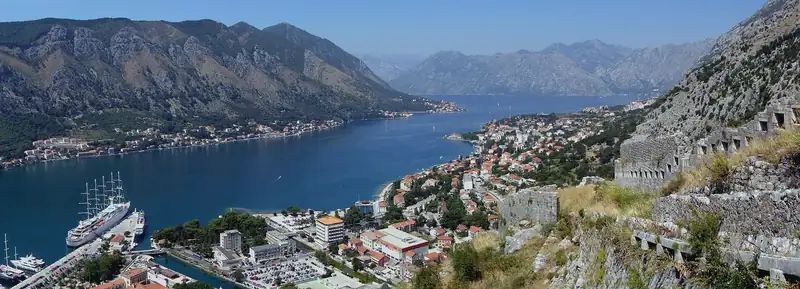
Montenegro is a small Adriatic state with a coastline that has attracted significant international property investment, particularly around the Bay of Kotor, Tivat and Budva. It uses the euro, is a NATO member and is among the most advanced candidates for European Union membership. For investors, this creates a residence option that is inexpensive to maintain while offering exposure to a market expected to converge further with EU standards.
The Law on Foreigners allows temporary residence on several grounds, of which two are relevant to private clients. A foreigner who owns residential real estate in Montenegro may apply for temporary residence on the basis of that ownership. Alternatively, a founder or director of a Montenegrin company can obtain residence linked to that business, provided the company is active, registered for tax and maintains appropriate premises and accounts. Amendments to the Law on Foreigners adopted on 31 December 2025 and in force since 17 January 2026 require property-based applicants to show, through the Tax Authority's transfer-tax decision, a taxable value of at least EUR 150,000; permits issued earlier on this basis can be extended without the value test. Owner-directors or entrepreneurs holding more than 51% of the company renew only if the company paid at least EUR 5,000 a year in taxes and contributions. EU/EEA/Swiss nationals are exempt from both rules. In both cases applicants must show health insurance, means of subsistence, accommodation and a clean criminal record.
Temporary residence permits are generally issued for one year and renewed annually while the underlying ground remains in place. After five years of continuous lawful residence, holders may apply for permanent residence. Naturalisation is a much longer process: ordinary acquisition of Montenegrin citizenship requires a lengthy period of lawful residence and, in principle, renunciation of the previous nationality, and the citizenship-by-investment programme that briefly offered an alternative ended at the close of 2022.
Montenegro's tax system is comparatively light. Corporate profits are taxed progressively at 9%, 12% and 15%, and personal income tax is also progressive with a top rate of 15%. Residence in Montenegro does not on its own grant Schengen access, but the country's EU accession process — with 21 of 33 negotiating chapters provisionally closed by mid-October 2026 and the government still targeting the conclusion of negotiations by the end of 2026 — makes it a forward-looking base for families planning a long-term European footprint.
Key benefits
- Residence linked to property ownership, without a formal investment programme or quota
- Low corporate and personal income tax rates by European standards
- Euro-denominated economy, reducing currency risk for property holdings
- Advanced EU candidate, with potential long-term upside for residents and investors
- Path to permanent residence after five years
- Mediterranean lifestyle with direct air links to major European hubs
- Spouse and children can join through family reunification
Requirements
- Valid passport and, where required, entry visa
- Title to residential property registered in the Montenegrin cadastre with a taxable value of at least EUR 150,000 per the Tax Authority transfer-tax decision (property route; EU/EEA/Swiss nationals exempt)
- Company registration, tax registration and evidence of activity; for renewals by owners of more than 51%, at least EUR 5,000 a year paid in taxes and contributions (business route)
- Proof of accommodation in Montenegro
- Health insurance valid in Montenegro
- Evidence of sufficient means of subsistence, usually through a local bank account
- Criminal record certificate from the country of nationality or residence, legalised or apostilled
- In-person attendance in Montenegro for biometrics during the application
Investment options
Temporary residence by property ownership
For owners of residential real estate in Montenegro. Since 17 January 2026, third-country nationals must own property with a taxable value of at least EUR 150,000, as set in the Tax Authority's transfer-tax decision (Law on Foreigners, Art. 56 as amended); EU/EEA/Swiss nationals are exempt, and permits issued before that date can be renewed without the value test. The permit does not allow work, and implementing regulations are still due, so we confirm current practice with the authorities before purchase.
Temporary residence by company
Company must pay at least EUR 5,000 a year in taxes and contributions (renewals by owners of more than 51%)
For founders or directors of an active Montenegrin company with premises, a bank account and tax compliance. Suitable for entrepreneurs who will genuinely operate locally.
Permanent residence
After 5 years
Available after five years of continuous temporary residence, removing the need for annual renewals.
Step-by-step process
- 1
Route and property review
We confirm whether the property or company route fits your plans and review title, permits and encumbrances on any target property.
- 2
Acquisition or company formation
The property purchase is completed and registered, or the company is incorporated, registered for tax and given a business address.
- 3
Banking and insurance
A local bank account is opened, funds are placed to evidence means, and health insurance is arranged.
- 4
Application filing
The temporary residence application is submitted to the competent police directorate with supporting documents and biometrics.
- 5
Permit issuance
Once approved, the residence card is issued for one year; family members apply on the basis of family reunification.
- 6
Renewals and permanent residence
We manage annual renewals and prepare the permanent residence application after five years.
Typical documents
- Passport copy and photographs
- Property title extract (list of real estate) or company registration documents
- Lease or ownership evidence for accommodation
- Health insurance policy
- Bank statement from a Montenegrin bank
- Criminal record certificate, legalised or apostilled with translation
- Marriage and birth certificates for accompanying family members
- Proof of payment of administrative fees
The Legal Wealth role

Legal Wealth structures Montenegro as a measured, compliant part of a wider residence strategy. We coordinate legal due diligence on property, company formation and banking, assemble source-of-funds evidence, and manage annual renewals so that the path to permanent residence remains intact. We are candid about what Montenegro residence can and cannot offer, including the absence of Schengen rights and the closure of the citizenship programme.
Arrange a private conversationFrequently asked questions
Is Montenegro's citizenship by investment still available?
No. The programme concluded on 31 December 2022 and has not been reopened. Montenegro now offers residence options only.
On what property basis is Montenegrin residence granted, and is there a value threshold?
Since 17 January 2026, amendments to the Law on Foreigners (Art. 56) require third-country nationals to own residential real estate registered in the Montenegrin cadastre with a taxable value of at least EUR 150,000, as shown in the Tax Authority's transfer-tax decision, together with proof of accommodation, health insurance, means of subsistence and a clean criminal record. EU/EEA/Swiss nationals and their family members are exempt, and permits issued before 17 January 2026 can be renewed without proving value. The permit does not allow work, and implementing regulations are still awaited, so we confirm current practice with the authorities, and review title, permits and encumbrances, before any purchase is made.
What validity and renewal cycle applies to the Montenegrin residence permit?
Temporary residence is generally granted for one year and renewed annually for as long as the underlying ground continues: registered property ownership or, on the company route, an active, tax-registered company with premises and accounts. Since 17 January 2026, owner-directors or entrepreneurs holding more than 51% renew only if the company paid at least EUR 5,000 in taxes and contributions in the previous year. Each renewal preserves the continuous record on which permanent residence later depends, which is why the annual cycle is best managed as part of the long-term plan rather than treated as a formality.
When does Montenegrin residence mature into permanent status, and what lies beyond it?
Permanent residence may be sought after five years of continuous temporary residence in Montenegro, removing the need for annual renewals. Naturalisation is a much longer process: ordinary citizenship requires a lengthy period of lawful residence and, in principle, renunciation of the previous nationality, and the citizenship-by-investment alternative ended on 31 December 2022. For most families, permanent residence is therefore the realistic end point of a Montenegrin plan.
How does Montenegro's position outside the EU and Schengen affect a resident's mobility?
A Montenegrin permit does not confer Schengen rights: Montenegro is not in the EU or Schengen, so visa-free travel continues to depend on the holder's own nationality. The country is nonetheless a NATO member, uses the euro and is among the most advanced EU candidates, with 21 of 33 chapters provisionally closed by mid-October 2026 and the government still targeting the conclusion of accession negotiations by the end of 2026. Montenegro therefore fits within a wider European strategy as a forward-looking Adriatic base, not as a substitute for EU residence.
What personal and corporate tax framework applies to residents of Montenegro?
Montenegro's tax system is light by European standards. Personal income tax is progressive with a top rate of 15%, and corporate profits are taxed at 9%, 12% or 15% depending on the level of profit. Tax residence depends on presence and centre of interests rather than on the permit itself, so the residence card and the tax position should be planned as distinct questions, particularly for founders using the company route.
Last reviewed: 2026-10. Requirements, fees and timelines change. Information is general, reviewed on the date shown, and is not legal or tax advice.
Sources