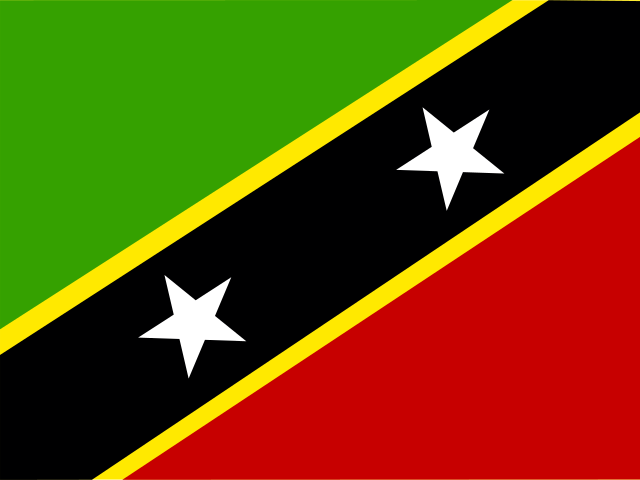
 Family trust in Nevis
Overview
The Nevis International Exempt Trust Ordinance, first enacted in 1994 and now cited as Cap. 7.03(N), creates the 'international trust': a trust whose settlor and beneficiaries are not resident in Nevis, whose property does not include land in Saint Kitts and Nevis, and which has at least one trustee that is a Nevis company or a trust company doing business on the island. The trust is registered with the Registry of the Nevis Financial Services Regulatory Commission by a licensed registered agent, which files a certificate confirming that the trust qualifies, the trustee's name and the date of settlement. The trust deed itself is not placed on a public register, and non-criminal court proceedings concerning an international trust are heard in private.
The Ordinance is designed to give certainty to settlors who act early. The FSRC summarises the position as follows: a creditor's sole remedy is to allege a fraudulent transfer or disposition; a trust settled more than one year after the creditor's cause of action accrued is not deemed fraudulent; and a creditor seeking to set aside a transfer must prove beyond reasonable doubt that it was a fraudulent disposition. Judgments of foreign courts against the trust are not enforced, so any claim must be started again before the Nevis court. Since the 2015 amendments, a claimant must also lodge a bond before proceeding, widely reported as US$100,000, and the trustee may combine or divide trusts and hold investments approved by the protector.
These protections have limits that a responsible plan must respect. Transfers made when the settlor is insolvent, or with existing or reasonably foreseeable creditors in view, remain open to challenge in Nevis, and courts in the settlor's home country can act against the settlor personally even if the Nevis court will not enforce their judgments: orders to repatriate assets, contempt sanctions and the unwinding of transactions under domestic insolvency law have all been used against settlors elsewhere. Trustees and registered agents apply anti-money laundering rules, verify the source of wealth and usually require a sworn declaration of solvency, and Saint Kitts and Nevis exchanges financial account information under the Common Reporting Standard and FATCA.
Nevis also offers the multiform foundation under the Nevis Multiform Foundations Ordinance 2004, which can be established with characteristics closer to a trust, a company or a civil-law foundation, and Nevis limited liability companies are often held beneath an international trust to own investment accounts. Governance is usually built around a protector, who under the Ordinance may direct or approve distributions and investments, while the Nevis trustee holds legal title. Tax is neutral at the level of the trust, so the analysis that decides whether the structure is appropriate sits in the countries where the settlor and beneficiaries live.
Key benefits
- A dedicated statute with a one-year limitation rule and a criminal-law standard of proof for fraudulent disposition claims, giving early, solvent settlors a high degree of certainty
- Foreign judgments are not enforced against an international trust, so claimants must re-litigate their case in Nevis under Nevis law
- Firewall against forced heirship rules of the settlor's domicile, residence or nationality
- Unlimited duration, with flexible protector powers over distributions, investments and trustee changes recognised by statute
- Modest official fees and a registration process that does not place the trust deed or beneficiaries on a public register
- Spendthrift protection: a beneficiary's creditors cannot compel distributions from a discretionary interest
- A choice of companion vehicles, including Nevis LLCs and multiform foundations, within one jurisdiction
Requirements
- Settlor and beneficiaries must be non-resident in Nevis, and trust property must not include land situated in Saint Kitts and Nevis
- At least one trustee that is a Nevis-incorporated company or a trust company doing business in Nevis
- Registration with the FSRC Registry through a licensed registered agent, with a certificate from a trust company, barrister or solicitor confirming that the trust qualifies as an international trust
- Payment of the registration fee and an annual renewal fee each year; late renewal attracts a penalty
- Customer due diligence under the Nevis AML/CFT framework: the registered agent must hold accurate, current information on the settlor, trustees, protectors and beneficiaries
- Source-of-wealth and source-of-funds evidence for every asset settled, and in practice an affidavit of solvency from the settlor
- A solvency and claims review confirming that no existing or foreseeable creditor will be prejudiced by the transfer
- Written tax advice in each relevant country, since the trust may be treated as transparent, a grantor trust or a controlled foreign entity at home
- CRS and FATCA classification of the trust and any underlying company, with annual reporting by the reporting financial institution
- Notification to the Registry of changes of trustee, registered agent or name, and of termination
Structure designs
Discretionary international trust with a protector
The core Nevis structure. A Nevis trustee holds the assets on discretionary terms for the family; an independent protector can veto or direct distributions and replace the trustee. Suits families seeking long-term preservation of liquid wealth with independent oversight.
International trust owning a Nevis LLC
The trust holds a Nevis limited liability company that maintains bank and custody accounts. While circumstances are calm, a family member or adviser may manage the LLC; the trustee can take over management if required. Suits families who want day-to-day investment involvement within defined limits.
Spendthrift or protective trust for a vulnerable beneficiary
Interests are discretionary or protective so that a beneficiary's creditors, or a beneficiary's own poor judgement, cannot exhaust the fund. Often used alongside a family constitution for the next generation.
Qualified foreign trust re-domiciled to Nevis
An existing trust governed by another law can change its governing law to Nevis law and register as a qualified foreign trust, if its terms allow it. Requires careful review of the original trust's history, tax position and creditor exposure at the date of migration.
Nevis multiform foundation
A foundation under the Multiform Foundations Ordinance 2004 that can take on trust-like, company-like or foundation characteristics. Suits civil-law families who prefer an entity with legal personality to a trust relationship.
Purpose trust holding a private trust company
For larger families, a non-charitable purpose trust can own a private trustee company whose board includes trusted advisers, with administration delegated to a licensed Nevis service provider.
Step-by-step process
- 1
Suitability and solvency review
Review the family's assets, liabilities, pending or threatened claims, professional exposure and residence. If a dispute is already foreseeable, an asset protection trust is not the right tool and we say so.
- 2
Tax and reporting analysis
Obtain advice in each relevant country on how the trust, any LLC and future distributions will be taxed and reported, including grantor-trust, attribution and exit-tax rules.
- 3
Trustee and protector selection
Choose a licensed Nevis trustee and registered agent, and an independent protector outside the settlor's home jurisdiction; agree fee schedules and service standards.
- 4
Draft the trust instrument
Prepare the trust deed, protector provisions, letter of wishes and, where used, the LLC operating agreement, reflecting the family's governance and succession aims.
- 5
Due diligence and registration
The trustee completes KYC, source-of-wealth and solvency checks; the registered agent files the registration with the FSRC Registry and pays the government fee.
- 6
Funding and banking
Open accounts in the name of the trustee or LLC, transfer assets with full documentation, complete CRS and FATCA self-certifications and file any home-country disclosures.
- 7
Annual governance
Renew registration each year, minute trustee and protector decisions, update KYC, and review the structure whenever residence, family circumstances or tax rules change.
Typical documents
- Certified passports and proof of address for the settlor, protector and adult beneficiaries
- Source-of-wealth narrative supported by evidence such as sale agreements, audited accounts, tax returns or probate documents
- Source-of-funds evidence and bank statements for each asset to be settled
- Personal financial statement and sworn affidavit of solvency from the settlor
- Disclosure of any pending, threatened or reasonably anticipated litigation, regulatory investigation or guarantee
- Written tax advice from each country where the settlor and beneficiaries are resident or taxable
- Draft trust deed, protector appointment and letter of wishes
- Nevis LLC articles and operating agreement, where an LLC is used
- CRS self-certification forms and FATCA declarations
- Professional or bank reference letters as required by the trustee
The Legal Wealth role

Legal Wealth helps families decide whether a Nevis international trust belongs in their plan at all, and if so how it should sit alongside residence, citizenship and operating structures elsewhere. We design the structure, test it against the tax and reporting rules of each country where family members live, prepare a complete source-of-wealth and solvency file, and coordinate licensed Nevis trustees, registered agents, independent protectors and home-country counsel. Trusteeship and registered agent services are provided by licensed providers we coordinate; Legal Wealth does not act as trustee or protector. Our approach is compliance-first: we decline mandates where a transfer would prejudice existing or foreseeable creditors.
Arrange a private conversationFrequently asked questions
How long must a creditor wait before a Nevis trust is protected?
According to the FSRC, a trust settled more than one year after the creditor's cause of action accrued is not deemed a fraudulent disposition, and any creditor within time must prove its case beyond reasonable doubt. The rule rewards early, solvent planning; it does not protect transfers made to defeat known claims, which can still be set aside, and it does not limit what the settlor's home court can do to the settlor personally.
Will a Nevis court enforce a judgment from my home country?
No. Foreign judgments against an international trust are not enforced in Nevis, and a claimant must bring a new action before the Nevis court, after lodging the bond required by the Ordinance. However, a home-country court can still order a settlor to repatriate assets and impose contempt sanctions if the settlor appears to retain control, so control and timing must be designed with this in mind.
Is a Nevis trust confidential?
The trust deed and beneficiaries are not on a public register and Nevis trust proceedings are heard in private. That is privacy, not secrecy: the registered agent holds beneficial ownership information that authorities can obtain, banks report under CRS and FATCA, and most settlors must disclose the trust in their own tax filings.
Can I be a beneficiary or keep control?
A settlor can be a discretionary beneficiary, and the Ordinance recognises protector powers to direct or approve distributions and investments. Retaining too much personal control weakens protection and can cause home-country courts to treat the assets as still yours, so an independent protector and a professional trustee are usually recommended.
How is a Nevis trust taxed?
An international trust is not taxed in Nevis. Tax arises where the settlor and beneficiaries live: many countries attribute the income of a settlor-interested trust to the settlor, and US persons usually treat it as a grantor trust with annual reporting. Advice in each country is essential before funding.
How does Nevis compare with the Cook Islands?
Both have purpose-built asset protection statutes, non-recognition of foreign judgments and a criminal standard of proof. Nevis has a one-year rule linked to when the cause of action accrued and a claimant bond; the Cook Islands combines a two-year and a one-year rule and has the longer record of contested cases. Trustee quality, banking relationships and the family's other structures usually decide between them.
Last reviewed: 2026-10. Requirements, fees and timelines change. Information is general, reviewed on the date shown, and is not legal or tax advice.
Sources
- Nevis Financial Services Regulatory Commission – Trusts
- Nevis FSRC – Nevis International Exempt Trust (Fees) (Amendment) Regulations 2024, SRO 12 of 2024
- Nevis FSRC – Nevis International Exempt Trust Ordinance: February 2020 consultation bill
- Nevis FSRC – Multiform Foundations (Amendment) Regulations 2014
- IFC Review – Nevis: LLC and trust law amendments (2015)
- Trident Trust – Nevis enhances its corporation, LLC and trust laws